
by Bela Seitz
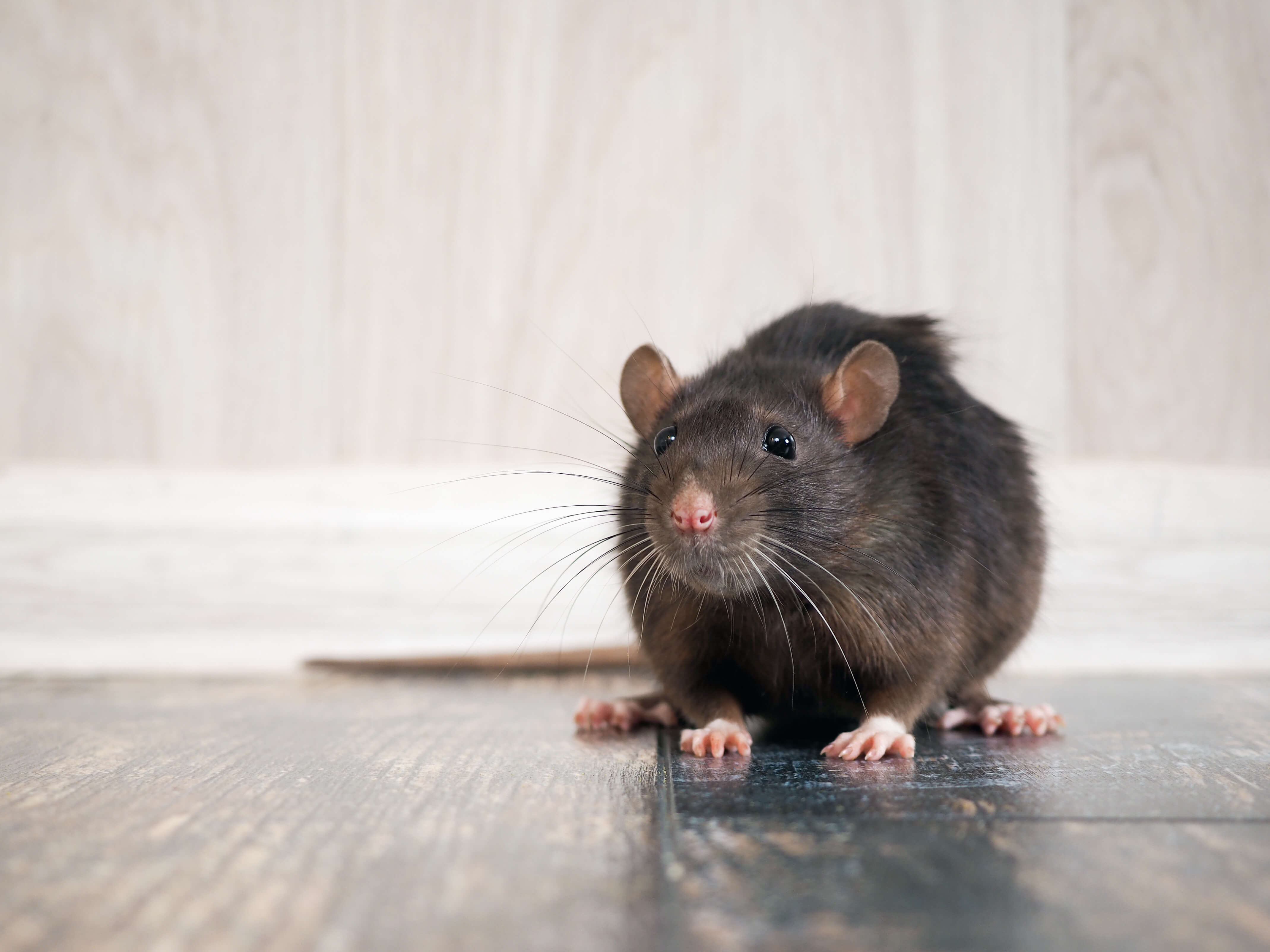
photo c/o How to Prevent Rats from Eating Car Wires
Grey billowing clouds rushed across the sky, as though someone had a high-powered fan propelling them across the vast blue expanse so that the weather could match the demeanor of the collected reporters. They used to have passion in their eyes, but now their faces were taut, stretched with the gravity of the situation and an innate understanding that the news was no longer something to look at on your phone and laugh about – but was something to be taken seriously.
At the front of the crowd was the Rat Czar, her silver hair gleaming like a beacon. She took a moment to set her binder down onto the podium in front of her, flicking it open to the crumpled legal paper that held her rushed first draft of this speech which had been written in the waiting room of a Harlem hospital. Her eyes soaked in the scribbled words and then she pulled the thin microphone down towards her small figure; some of her staff had suggested that she step on a stool to seem more powerful and to easily reach the microphone, but the Rat Czar did not like misrepresenting herself as anything but a stocky middle-aged mother. Her voice, tinged with a Hispanic accent, filled through the silent street. “Thank you to everyone for coming down here on such short notice, to publicize this. I am happy to report that Mr. Reed is stable and did not sustain serious injuries.”
The journalists had already hounded the hospital for that information, not that it mattered. The damage was done with or without him being alive; the video of him walking home – and of course he had a respectable job as a custodian of an elementary school, which the news outlets were loving so they could paint him as defenseless never mind the fact that he had been walking home from his mistress’ house four hours past curfew – and then disappearing under a mound. A mound of rats. The video, which was from a surveillance camera in front of a bank across the street, was black-and-white and grainy, so upon first watch it looks like a wave of sewage water encased the elderly man, rolling over him and leaving him stunned lying on the concrete sidewalk leaking blood. But, once you squinted, you could see their eyes. And their tails, which were light enough to register as a milky white on the camera. A pack of rats jumped on top of him with the precision of an assassin squad and, in seconds, took him out. It had taken a few days to find another video but, with a new angle, the world saw that, after the rats had finished with Mr. Reed, they dispersed back onto the streets; they had come together as a writhing mass of spiky grey fur for no clear reason other than to harm him and then they disappeared into subway tracks, pipes, ripped open garbage bags – any dark place where they could find food. The Rat Czar continued. “However, this is now the second rat attack on civilians in the last two weeks.” The journalists knew that too. They had reported heavily on the couple in the park who climbed a tree to escape the snapping jaws of what seemed like hundreds of rats, only to learn that rats too can climb, which they did. They were still both unconscious in a hospital; the fall from the tree as it cracked under the weight of so many living creatures had broken more bones in their bodies than getting hit head-on by a train would have. “As of right now, New York City is officially declaring a state of war against the rats.”
Now that was news.
The Rat Czar glanced behind her to a pitifully depressed man. His suit had been impeccably ironed at the start of the day, but it was now a crumpled mess – his tie hanging in two strips around his neck – after hours of meetings with state and federal government about how he had managed to plunge the largest city in America into an evolutionary nightmare. She had wanted him to make this announcement – thinking that people would trust their mayor more than someone who was clearly failing in their job to mitigate the rat population in the city – but he had refused. Now, all he did was dip his head in deference to her.
The message was clear: to the Rat Czar, who for the past two weeks had been shocked by how docile the mayor was; to the journalists waiting with bated breath for an explanation of what exactly a state of war meant for the city; and to the millions of people watching through their television screens and through livestreams on their phone. She was in charge.
“I have been spending a lot of time thinking, these past few weeks, for a solution to our rat problem. I tried to spray the streets, but the rats have developed an immunity to even our most expensive rat deterrent.” She thought of the meeting that she had a few days ago with some of her most trusted exterminators – who all had military backgrounds – as they told her they could no longer kill the rats with poison. Or with traps. “And we have set trap after trap. Glue traps are not strong enough to hold the rats and, if they do get caught on them, they alert other rats to come and eat the glue away to free them. The traditional snap traps do not work anymore because the rats recognize it and can maneuver through them to get the bait inside unharmed. Enclosed traps – the black boxes – will kill one or two rats before they are rendered useless, so they waste manpower to upkeep. Electric traps are ineffective because they leave rat carcasses in the streets. For the past month, the mayor has granted me full usage of the Department of Sanitation’s resources but, even with regular surveillance of electric traps, we do not reach all of the carcasses in time, before more rats appear to eat their brethren’s corpses. Killing rats is only half of the problem since, because they are cannibals, if we do not remove the dead ones quickly enough before more rats arrive, it is like presenting an all-you-can-eat buffet to them.”
“And we tried to introduce sterilized rats into their population to prevent reproduction, but that does not work because there are just too many of them. I do not have an exact count, but right now, there are more rats in New York City than there are humans. We would need to sterilize millions of rats to make an impact.” The Rat Czar glanced up to the sky, where clouds were still staining its grey sheen, and remarked to herself that if the white flumes relaxed a little, the sky’s color would be exactly like the underbelly of a baby rat. She did not need her notes for this entire speech; for the past year, she has been repeating this explanation to everybody she could. “So, we cannot trap them, we cannot poison them, and we cannot collect their bodies quickly enough. How do we proceed?”
She paused, glancing down at her legal pad. In smudged graphite, circled, was the word that she had been dreading saying. Guns. She knew that this would work – she had run the models and talked to every single expert on this subject – but she also knew the unpredictable evils lurking beneath the surface of some humans. She could be arming humanity with the means to extinguish its own population but, if she did nothing then, sooner or later, the rats would do it themselves.
She looked up, past the journalists and the few people brave enough to go outside and see her press conference. She looked toward the dozens of cameras resting on tripods at the back of the street that had been hurriedly made into a press room. It was no longer safe to give these sorts of conferences indoors, when the structural integrity of buildings was unsure due to the sheer number of rats running through their walls. “The rats are winning right now because they do not have a predator, because we have not been able to establish ourselves as the ones on top. They are the apex predator only because we have permitted them to grow uncontrollably – and only because nothing is killing them. That ends now. We did this years ago with the spotted lantern flies; they were an invasive species decimating our trees because there was nothing keeping them in check, until the government asked residents to kill them. It took three years, and they were gone.”
“Rats are different. Rats are smart. They work together and they adapt. They are like us.” She lifted up her hand and, without taking her eyes off the cameras, pointed to the stack of cardboard boxes next to her. “But they do not have guns.”
One of the Rat Czar’s closest advisors stepped forward, ripped open one of the boxes, and placed one of the rifles into her outstretched hand. She held it up for the cameras to see. “These rifles do not have ammo and a shot from them will not kill us, but they can cause serious harm to humans. Starting at nine in the morning tomorrow, they are available to be picked up at City Hall by people older than thirteen. The Department of Sanitation and my workers will no longer kill rats; we will be on pickup duty. We are not asking that people set aside their daily lives to shoot down rats, but we do ask that able-bodied New Yorkers get a rifle and, if you see a rat, try to kill it. When you kill one, just press a button on the side of the rifle, and we will come get the body.”
The Rat Czar pressed a button on the side of the gun and a red light on its side started to blink. Her hands ran over the gun, gently smoothing out the pristine metal. It was painted a yellow that was reminiscent of a ripe bell pepper, which the federal government had insisted on because they thought that people would be less alarmed if they saw an offensively colored gun. The gun’s barrel was as long as a bedside lamp so that pressure could build and build until a ball of compacted air was propelled outwards, moving so fast that it would break a rat’s skin and make it bleed to death. Bullets were more efficient, but the amount of money that the city was saving on providing only a rifle and not ammunition was enough to justify the use of these brutal guns. Besides, after all the rats had done, they did not deserve painless deaths. They deserved for their skin to fracture like a bubble, popping with the ease of a summer breeze and erupting blood, guts, and organs into the world like a volatile volcano. They deserved to suffer.
“And the curfew is still in effect.” Eleven p.m. “I understand that this will come with disastrous effects – that we cannot stop people from getting this weapon who will turn it on humans – and there will still be serious consequences for using this gun for other purposes, but, right now, it is worth it. The casualties that are going to come, from looters and murderers, those are worth it, if we can take back our spot at the top of the food chain and fully eradicate the rats. Because they are hungry. And they are getting sick of the taste of garbage.”
The Rat Czar took a sweeping look around the street. It took her only three seconds to spot her enemy. At the top of a streetlamp, there was a rat sitting with its paws tucked under its frame. She could make out its ruby eyes, even at this distance, and, for a second, the two creatures calmly gazed at each other.
Then, lifting up the rifle, she took aim. And fired.
The rat’s skin seemed to shimmer and then explode. A bomb of blood exploded from the light, dripping down its cracking glass covering and staining the light with a bloody filter. It landed on some of the lens and some of the journalists, who for the first time started to murmur as they ran away to avoid the splash zone.
The Rat Czar dropped the gun back down to her side. “I will be downtown tomorrow helping out with gun distribution and making sure that people understand the danger that they can now cause with the squeeze of a trigger, and you all will hear from me in the next couple days. And it will get worse before it gets better; I can promise you that. Stay safe.”

On the first day, over six hundred thousand people arrived in City Hall to get a gun. For the first few hours, the employees scanned people’s identification cards but once they realized that they would not be able to serve everyone unless they were quicker, they just started handing them out to people. The Rat Czar herself stood on top of a sanitation truck and passed out thousands of guns, only asking for proof if someone looked too young. The federal government had warned of civil disobedience, but there was nothing but a few injuries as people shot themselves to test out the damage that the gun could cause or to practice their aim. Tired mothers stood next to burly, tattooed convicts, waiting for their salvation, for their security, and the whole process went surprisingly quickly; in only a few hours, people returned to their daily lives, now with a bright yellow rifle strung over their shoulders.
And then the calls started to roll in.
The most frequent location for rat kills was the subway, which was the trickiest place for the sanitation department to remove rats since they had to climb down onto the track and normally ended up killing even more rats who had smelled the scent of fresh food and converged on the spot that their brethren had been murdered. But the calls came from everywhere: a teenage girl had bravely taken on a nest of rats that had been living in the basement of her family’s Queens house and was standing calmly next to a pile of thirty carcasses when the sanitation trucks came; a group of senior citizens slowly patrolled the area around their assisted living facility and finally, after being called to the same three-block radius three times in fifteen minutes, a sanitation truck parked on the corner and the workers helped the elders, who could barely shoot their rifles with their shaking hands, ensure that no one rats prowled around their home; and, most common of all, were the thousands of people who killed a rat in the middle of the street, alerted the pickup crew, and went on with their lives, leaving steaming carcasses forgotten on the ground.
The shortest response time was thirteen seconds and the longest was seventeen minutes, but the average was four minutes – although when the Rat Czar met with the head of the sanitation department, an eagle-eyed man with the straightest back she had ever seen, he seemed confident that he could reduce that number down to three minutes by the end of the week. She had first met him months before, when the mayor finally allowed her to take control of the sanitation department, and she realized immediately that she would be taking over nothing. He ran the most well-oiled system that she had ever seen, and she had no desire to shake things up when his current system worked flawlessly, so all she ever did was tell him what she needed and then he would take over. When she wanted to spray the streets, back when the rats were not immune to poison, she told him and two days later, he strapped a sprinkling system to all two thousand of his trucks and doused every square inch of the five boroughs. So, when she needed a pickup system that could handle the speed of eight million people killing rats and could also dispose of their bodies as quickly as possible, all she did was send him an email.
A week later, he installed a furnace into all of his trucks and created a schedule so that, at all times, there were hundreds of trucks roaming the city streets, waiting to turn on their siren and zoom over to the spot where a rat was killed. Each truck had two teams of four people inside of it who worked five hours on, five hours off and, when the Rat Czar accepted an invitation to ride along with one of the crews to see how they accomplished their job, she was pleasantly surprised to meet people who, like her, were willing to sacrifice time away from their loved ones to save humanity.
There were other attacks too, obviously. A child in a penthouse apartment in the Upper West Side shot his mother twenty-nine times with the rifle that she had picked up hours before from City Hall after she refused to let him watch television after dinner. Three different men had been killed in hit and runs, although these hit and runs were much more gruesome than a normal gun because every single person was shot dozens of times in the head. One of the men laid in the street long enough that, when an ambulance finally arrived, his entire corpse was covered in feasting rats. There were some domestic disputes that ended in one part of the couple badly injured, but at eleven p.m., just as curfew began, there had been only four deaths.
Then came the night.
For months, people had been cowering in their homes at night. The rats had gotten used to being the master of the nighttime, the king of anything that the moon touched, but no longer. Even though the Rat Czar warned people to stay indoors, she knew that they would not listen. Packs of children met on rooftops to shoot down rats from a vantage point, but then hordes of rats climbed buildings to chase them away. One four-story tenement house in Brooklyn collapsed under the weight of hundreds of rats trying to stop a woman who was shooting them down through a crack in her window. Seven people, dead. In Manhattan, a biker gang drove down Park Avenue and, downtown, Lafayette Street shooting at rats they careened past on massive Harley Davidsons. A sanitation truck followed them for the entire night, using a shovel to scrape hundreds of exploding rat bodies off of the sticky pavement. At around three am, one of the bikers left the rest of his gang to head home and, at the entrance to the Queensboro Bridge, he was ambushed. He swerved wildly, squishing dozens of rats with his tires, but one rat bit the leather of his boots and slammed his body onto the ground. The skin on his face was bitten off by the time an ambulance came to the scene, and it took three EMTs to scare off all of the rats who had gathered.
When the sun rose and people opened their doors, there had been fifty-one deaths. People had fallen off buildings as they were chased by rats or tripped down staircases, and a few others had been attacked. But the rats retreated when streaks of light started to break through the sky, sunlight appearing for the first time in weeks.
Day Two.
Even more people came to get rifles from City Hall, so many that they ran out. The factory upstate that had provided the city with two million rifles was producing more as fast as they could, but it would be a few days until there were more to give out, so the Rat Czar held another press conference. She told the world the statistics: that almost seventy people had died in one day, but the tally of rats killed was two hundred thousand and seventy-four. The price was steep and would continue to be steep, but it was going to be worth it.
A young girl on her way home from school disappeared. A passerby called the police and pointed toward an alleyway where she had wandered and, when they entered it, all that they found was the girl’s dress, with rat scratches tearing it apart.
In the Bronx, a woman entered her bathroom and saw a rat swimming in her toilet bowl. She grabbed her gun and shot it. It died, but the pressurized air broke her toilet bowl and burst her pipes. The co-op that she lived in shuddered and eventually collapsed. Thirty-four dead.
A group of teenagers called a rat killing but, when the sanitation truck arrived, they rushed it, tying up and knocking the four workers inside of it unconscious. They drove the truck around for seven hours, killing and burning over four hundred rats before the NYPD finally flagged them down. An hour after the news reported their booking, three more carjackings were attempted, one of which ended up with three sanitation workers dead and another which ended up with a teenager getting run over and then, as she lay bleeding on the street, the rats came and finished her off.
But people continued to shoot down the rats that they saw. And they were getting better at it. Grocery stores reported a shortage of canned drinks because people were buying them to set up on walls to practice their aim. And the streets stayed clean. Bloody, but devoid of the bodies of rats. Everything was working according to plan.
The night brought even more killing, on both sides. Humans missing their shots were bitten to death in the streets, but hunters were getting smarter. They would not call in the first rat carcass that they shot, instead waiting for hungry rats to appear so that they could create a bigger and bigger pile of death. In Prospect Park, where adults in the neighborhood agreed to meet after curfew to kill as many rats as possible, it took six sanitation trucks almost an hour to burn all of the rats killed during the night.
On the third day of people having guns, there were no deaths. Eighty-one people were admitted to hospitals across the five boroughs for rat-related injuries and hospitals had begun to run short on testing kits to ensure that people bitten by rats were not infected by the horde of diseases that they carried, but no one died. Ninety thousand rats perished, however, and the Rat Czar had another press conference where, for the first time in months, she smiled.
By day fourteen, people were calling for the curfew to be lifted. Over three million rats had been killed and, in certain neighborhoods, you could walk down a street without seeing a single rat. People always had their guns at the ready – nannies kept the bright rifle perched atop strollers, teachers kept them strapped to their backs while standing in front of their chalkboards, broadway actors painted the rifles to match their costumes and would shoot down rats from the rafters without deviating from their monologues – but they did not have to use them as much. The police were tired, but violent deaths where the rifles were the weapon used had decreased to only a few per day. And the sanitation department was tired, but the Rat Czar had issued a call for volunteers to take some shifts at the wheel and so there was new blood being trained and put onto the streets. It was working. Hundreds of people had died, but it was worth it.
The night of day fourteen was where it all went wrong. A convict, recently released from the Floridian jail system, had traveled by train to New York and, on the first day that he arrived, gotten himself a shiny new yellow gun. He milled through the streets for hours, just stroking the weapon, and then he went to Times Square. He went to the top of the glass stairs that, despite everything, were still full of tourists, and he started shooting. It took him a few tries before he realized that, in order to kill humans with the rifle, all he needed to do was aim for the skin between their eyes which was thinner and broke just as easily as the rats’ skin. Hidden in the crowds, people could not fight back, but they tried. Those who had guns started to fire them and, even though the original convict died shortly after the shooting began, shot down by a police officer, the violence never stopped. People kept shooting and shooting and shooting. Over five hundred dead.
And the rats came, smelling more blood than they could even conceive. The few people still alive after the massacre were overtaken by the stream of rats that poured into the street. There were so many that it was like one continuous grey tsunami – and no one survived. When the police came to try to stop the rats from eating the fallen corpses, they were killed as well. Fifty-nine more dead. Shooting the rats did nothing because the carcass could not be removed and so it would only be eaten, making the rats stronger, so after taking a helicopter over the area, the Rat Czar met with the head of the department of sanitation and told him to fix it. His first solution was to build walls – so that when they started shooting, the rats would have nowhere to run. Twenty-three dead, trying to drive concrete slabs into place. Entire trucks overtaken, completely covered in rats. And then a building started to shake. It was an entirely glass structure which housed offices and, on its ground floor, a Hard Rock Cafe. Everyone in the area tried to run, but for many of them it was too late. And when one building fell, it hit another one. And another. Ten blocks, razed. Now completely full of rats. Over two thousand dead.
Including the Rat Czar.
She always prided herself on being at the center of the madness and she had been inside of a sanitation truck helping to build the wall. She died instantly as a piece of concrete fell off of the first building and sliced the roof of the truck open like it was butter. The head of the sanitation department had been next to her in the truck, and it took hours for him to die; in that time, his entire leg, including the bone, was eaten. By rats.
New Yorkers saw the reports and waited for the Rat Czar to tell them of her next plan. But no one spoke. For two days, they waited for a leader to emerge from the ashes, but there was nothing. The mayor was nowhere to be found. The federal government released a statement of meaningless language that did not have the direct language that the Rat Czar used, which the public loved. So, they decided to act. Community leaders took over: knocking on doors and motivating adults to stop whatever was taking up their time and take this seriously. Two grandmothers in Astoria stood at a street corner and ordered everyone who had a gun to start shooting, working their way outward. In Battery Park, a banker who had lost his arm months before to an infection caused by a rat bite climbed on top of the bull statue and had to shoot three people in order to impose order. Everyone organized differently – the grandmothers assigned teams of adults blocks that they would patrol, whereas in Battery Park, the banker just told everyone what the most important areas was to save, where there were doctors holding a makeshift court and grocery stores that had perishables that the rats had not clawed their way into, and set people loose – but each system was effective and, if it wasn’t, then the neighborhoods helped each other out. People died, too many to count, but so did rats. People made bonfires in the streets to burn all of the rats’ bodies and the sickly scent of burning flesh filled the city, dark clouds of smoke billowing into the night sky, polluting its tranquil canvas with the harsh aroma of violence. Of victory.
Finally.
Some neighborhoods killed all of their rats in days and others took weeks, but eventually everyone was done. Free. The only place left to tackle was the place where everything had gone wrong, where the Rat Czar was slowly decomposing under a reinforced concrete beam, where there was still a consistent food source of dead humans for the rats to snack on. One journalist sent a drone into the center of Times Square and revealed a squirming mass of rats that seemed to move as one massive carpet: a carpet that was vicious and would break out into deadly squabbles if someone got too hungry. The rats were steadily increasing the radius of their safe haven, moving into city blocks that had been abandoned for weeks. But it was time – time to end it once and for all. All of the community leaders – there were nine in total, ranging from seventy-two to sixteen years old – met in the middle of a street, sitting down on folding chairs, and planned their attack.
They fully evacuated Manhattan, even the areas that had been rat-free for weeks; they sent people on ships to Staten Island or over to the coast of New Jersey. Then, they all chose their best fighters, those who had the best aim or those who were willing to be on the front lines and created teams of twelve. Each team went to a side street. Starting with three streets of distance between the mass of rats, the best fighters in New York began to shoot. It took a fair amount of time for the rats to realize what was happening and surge to attack the fighters, but then the fighters retreated. Because the city was deserted, they could retreat as far uptown as they needed and, at the worst, they went as far as 1st avenue and as high as 95th street, and so many died. People would trip as they were running away, or just simply be too slow. But for every fighter that fell, they would be replaced by four more, four single mothers, product managers, or models. It was warfare with an army made up of housewives, of high schoolers, of investment bankers, of bodega cooks, of artists, of consultants, of tourists caught in the wrong place at the wrong time, of people who had traveled across America to help out, of judges, of criminals, of pregnant women, of nurses, of writers, of politicians, of trust fund children, of anyone who was willing to put their life on the line and spend as much time as they could risking their life to shoot as many rats as they could. The rats were powerful in their number, but so were the humans. And the tide turned. Eventually.
The rats started to retreat. The humans regained ground and soon they were back in the 50s, then 47th, then there was only a two-block radius left with rats. The fighting changed; instead of shooting into an endless mound of rats, they were hiding again. The fighters started to pick through the rubble – and this was the deadliest time of all. In four seconds, someone’s ankle would be bitten, and they would be dragged off into the abandoned shaft of a building to their death. It took weeks. But it ended. The community leaders adopted the head of the sanitation department’s original idea, and they built a wall, using cranes to drag massive pieces of rubble into a compact pile to ensure that any hidden rats would have nowhere to go. And then they returned. People were hesitant and, of course, there were more deaths as people found lone rats still struggling to survive who were much hungrier and would attack anything with a pulse now, but things returned to normal. The mayor reappeared, out from some unknown bunker, and he led revitalization projects around the city, making sure that the majority of his resources were still infused into the sanitation department so that they were patrolling and making sure that there were no rats left. It was decided that the ten blocks that had crumbled down, that had been desecrated with the bones of hundreds of thousands of rats and thousands of humans including the Rat Czar, would be turned into a park.
In the process of building the park, a family of two hundred rats were found on the other side of the wall and three people died. Those rats were hungry. They attacked first, instead of waiting for nighttime. But the humans no longer hesitated anymore – no longer doubted if they should pull the trigger. They all knew how to aim now and they waited with the corpse of the rat, just in case any more should show up. When the sanitation trucks came, they recollected about the war against the rats and traded stories, using memories as kindling for the rat’s burning body.
Nearly a full year after the rats had fully been eradicated, a statue of the Rat Czar was unveiled in Times Square Park. It was bronze and atop a speckled grey marble pedestal and, if she had been alive, she would have joked that they were remembering her well by placing her on top of something that was the color of a rats’ skin. She was wearing the sanitation overalls that she wore every single day because they were thick enough to not break at a rat’s bite, and her short grey bob was resting against her shoulders peacefully. In her right hand, the only thing of color on the entire statue, was a bright yellow rifle.
And in the center of the rat-colored pedestal was a plaque. It glistened in the sun, blinding those that stood too close to it, but it would darken over the years as people came to pay their respects and stick bouquets of flowers into its lettering. Etched onto its surface, there were a few lines of text that the skittish mayor, who had been recently reelected, read to the large crowd that had come to the unveiling ceremony, many of them fighters whose bodies still bore the scars of the claws and teeth of rats.
“It will get worse before it gets better.”
– The Rat Czar.

Bela Seitz is a graduate of Vanderbilt University currently living in New York. She has work published in Vanderbilt Fiction Review and The Worlds Within.
 New Pop Lit
I wasn’t too sure at the begining but WOW! That was an awesome ride. Keep writing. X